
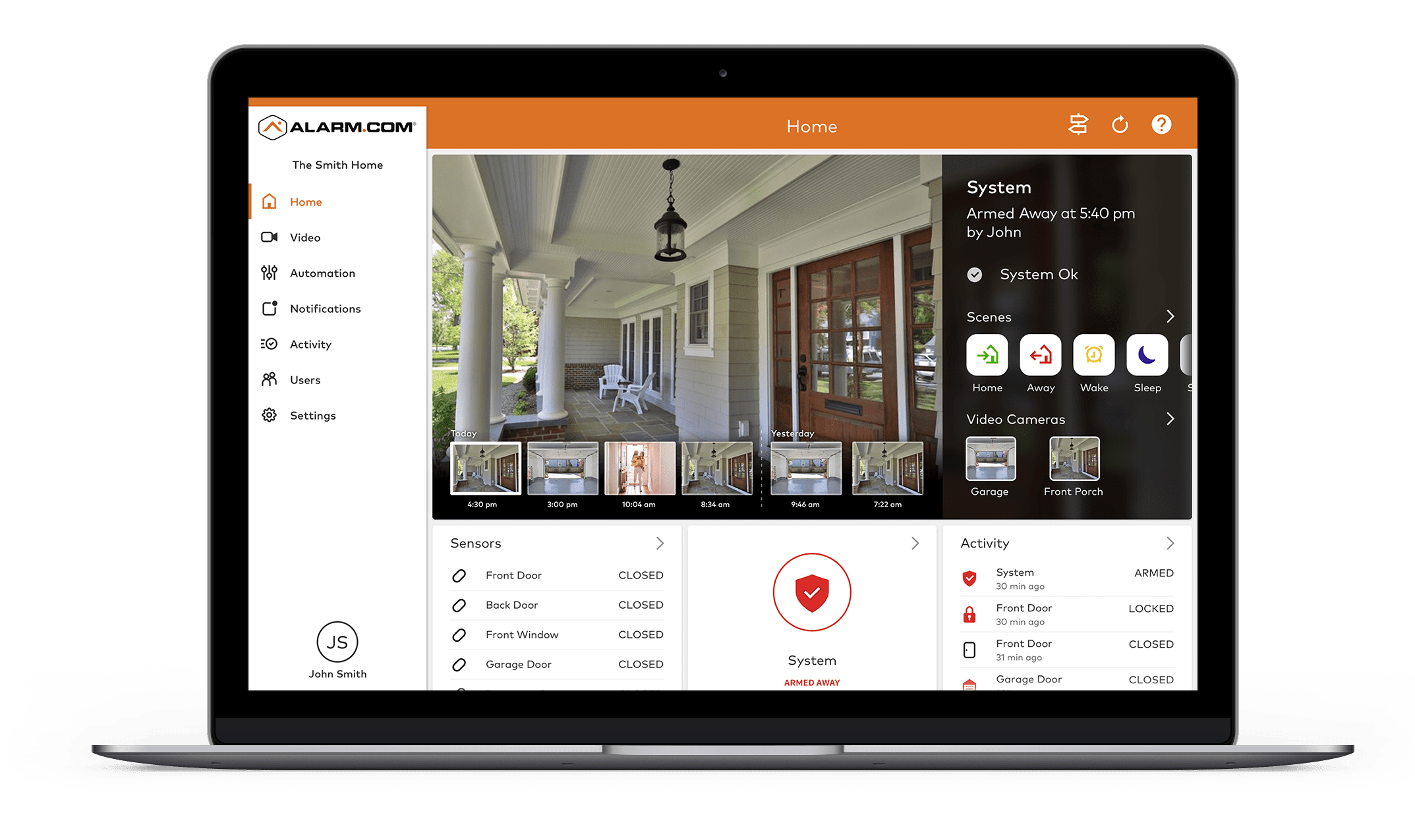
The honest answer: visibility and control. Lights, locks, garage doors, gates, thermostats, cameras, and even your water shutoff in one app, with scenes and schedules that run the house when you are not thinking about it.
The everyday stuff
This is what people actually use: every light in the house off from one button when you leave. The porch light on a schedule. Closing the garage door from your phone after the teenager leaves it open, again. The front gate opening for a guest from your phone. The air conditioning coming down an hour before you get home.
The protective stuff
The features nobody brags about are the ones that pay for the system. Leak detectors paired with an automatic water shutoff valve can close the main when a leak is detected, which can be the difference between a mop and a remodel. Monitored smoke and fire detection belongs on the same list, and it dispatches whether you are home or not.
One app, and your voice
Our security and automation customers live in one app that runs the house, with home theater on its own control, and voice control has caught up: Alexa and Google Home now talk to lights, locks, thermostats, and shades, and it reaches the audio too: tell Alexa to play something and it comes through the Sonos zones. Dim the lights without finding your phone. It sounds like a gimmick until the third night you use it.
Start small, scale up
Almost nobody buys the whole smart home on day one. It usually starts with the thermostat and the locks, and grows from there: shades, scenes, the gate, even the sprinklers. The system is built to scale, and our customers keep adding because the first pieces earn it.
Questions we get
No. A thermostat, a lock, and an app is a real starting point, and everything after that stacks onto it.
For our security and automation customers, one app handles arming, cameras, locks, lights, climate, and the garage. One login, not six.
Often yes. Part of the first walkthrough is sorting what you have into keep, connect, and replace.